Insights • Materials
Kitchen Cabinet Hardware Guide: Pulls, Knobs & Handles for DC Homes
Cabinet hardware is one of the most cost-effective ways to define a kitchen's personality — and one of the easiest decisions to get wrong. This guide covers the main hardware types, finish options, how to choose based on cabinet style, sizing rules, and realistic cost ranges for DC-area kitchen remodels.
Planning a full kitchen remodel? See our Kitchen Remodel Cost Guide for DC for budget planning context.

Hardware types
Pulls, Knobs & Handles: What's the Difference
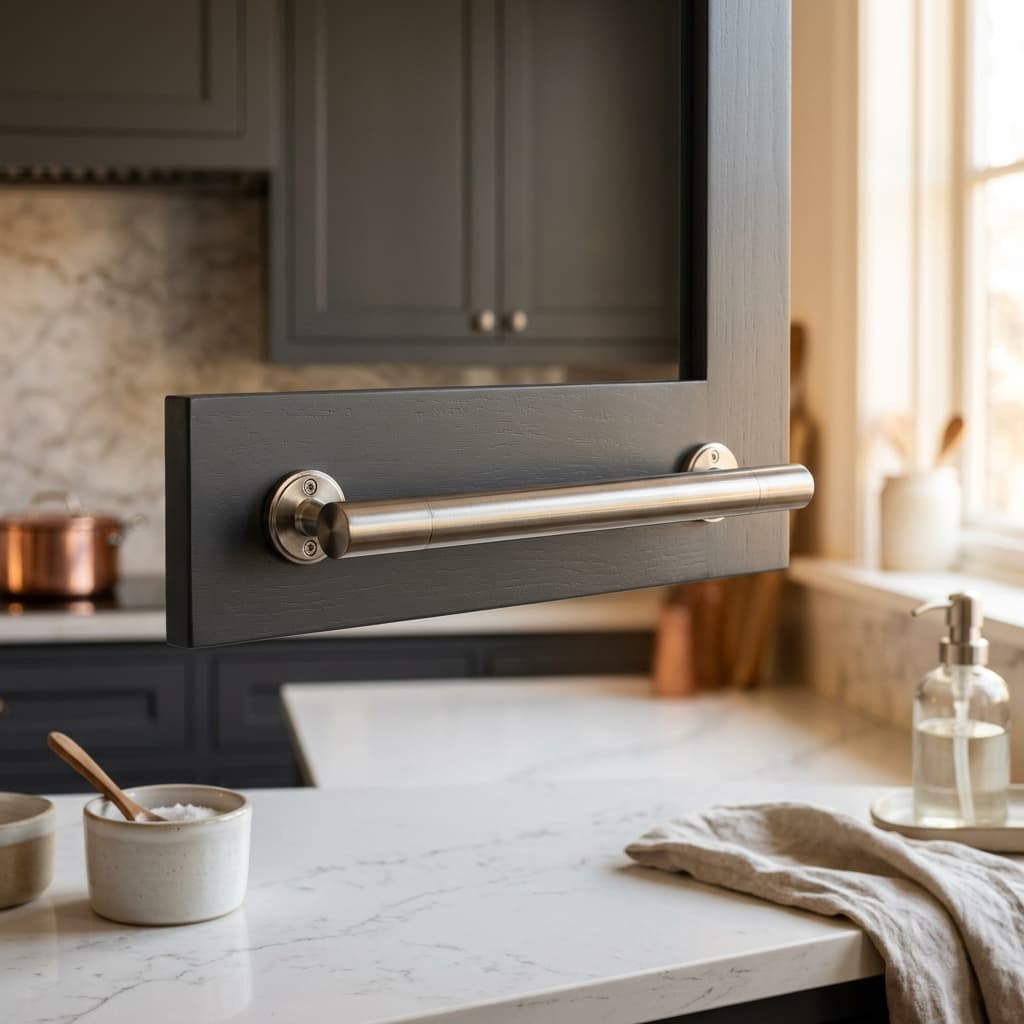
Bar Pulls
Bar pulls are straight, horizontal handles mounted with two screws. They're the dominant hardware choice in contemporary and transitional DC kitchens — clean, easy to grip, and visually aligned with both Shaker and flat-panel cabinets. Available in lengths from 3" to 18"+, bar pulls read as understated or bold depending on length and finish. Long bar pulls (10–18") running vertically on full-height pantry doors have become a signature look in high-end DC renovations.
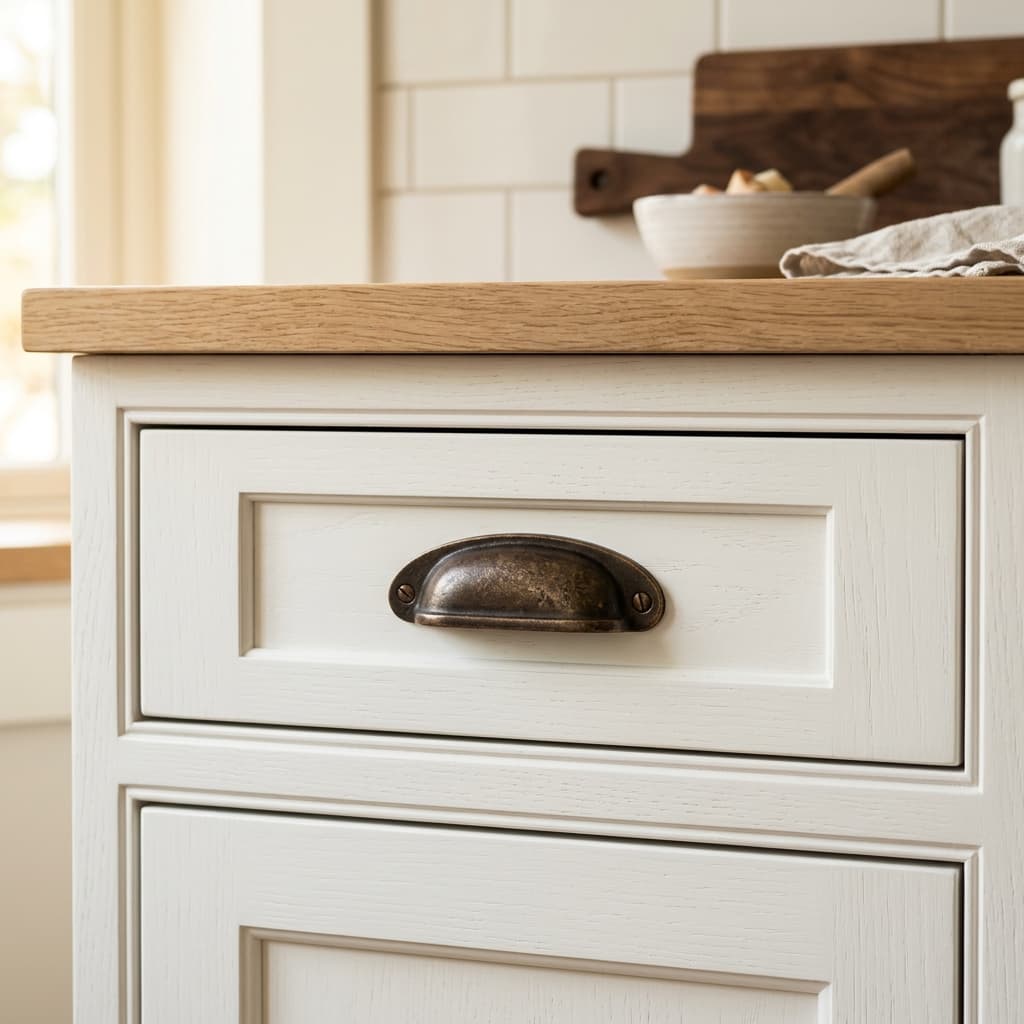
Cup Pulls (Bin Pulls)
Cup pulls have a curved, half-moon profile and a distinctly traditional character. They're most at home on Shaker-style lower drawers — particularly in farmhouse and cottage-style kitchens, or in DC rowhouses where the owner wants a warm, historically referential aesthetic. Cup pulls are almost always used on drawers rather than doors, since their profile isn't ideal for a pulling motion on hinged cabinet faces.
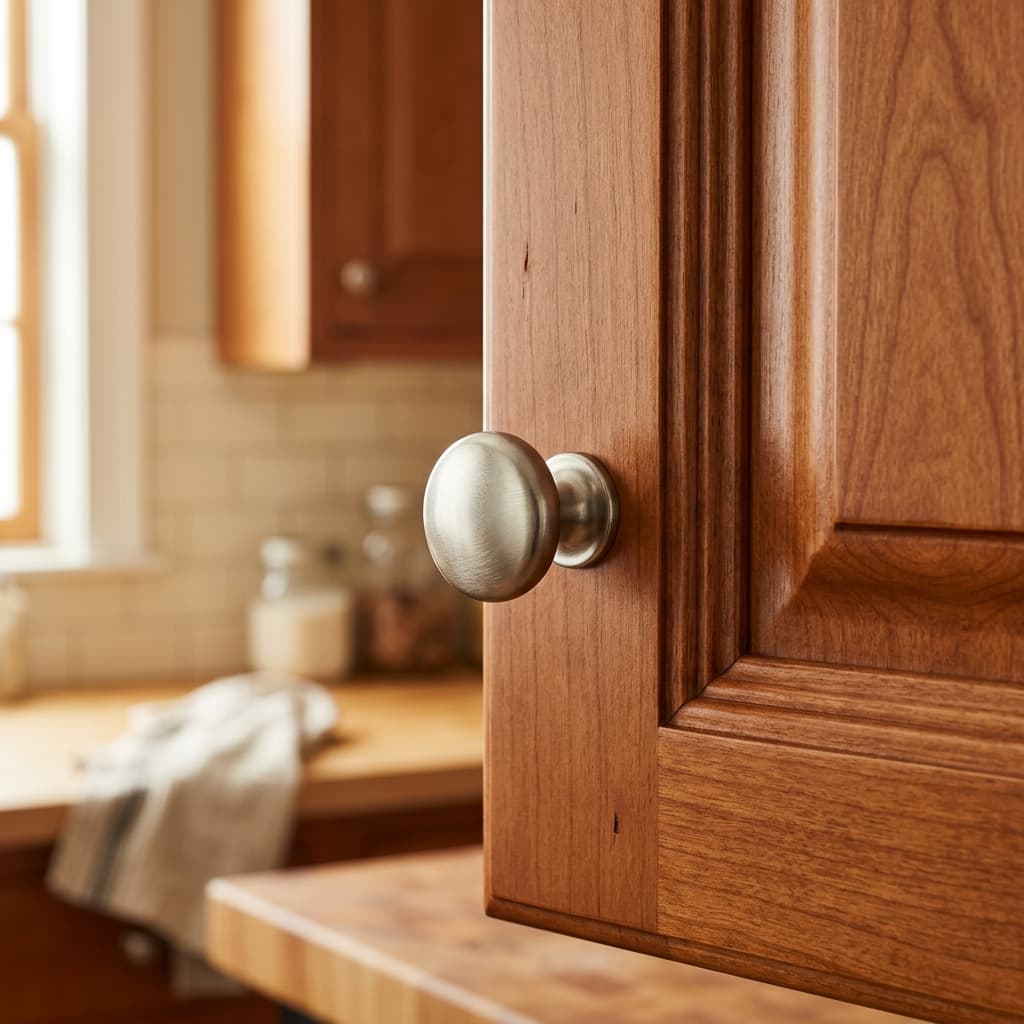
Knobs
Round or square knobs are the most traditional hardware option. They work well on upper cabinet doors and on traditional or raised-panel styles where a single-screw profile fits the door's proportions. Knobs are not recommended on drawers — the single attachment point makes them less ergonomic for pulling weight. In transitional kitchens, mixing knobs on doors with bar pulls on drawers is a classic combination that balances traditional and modern.
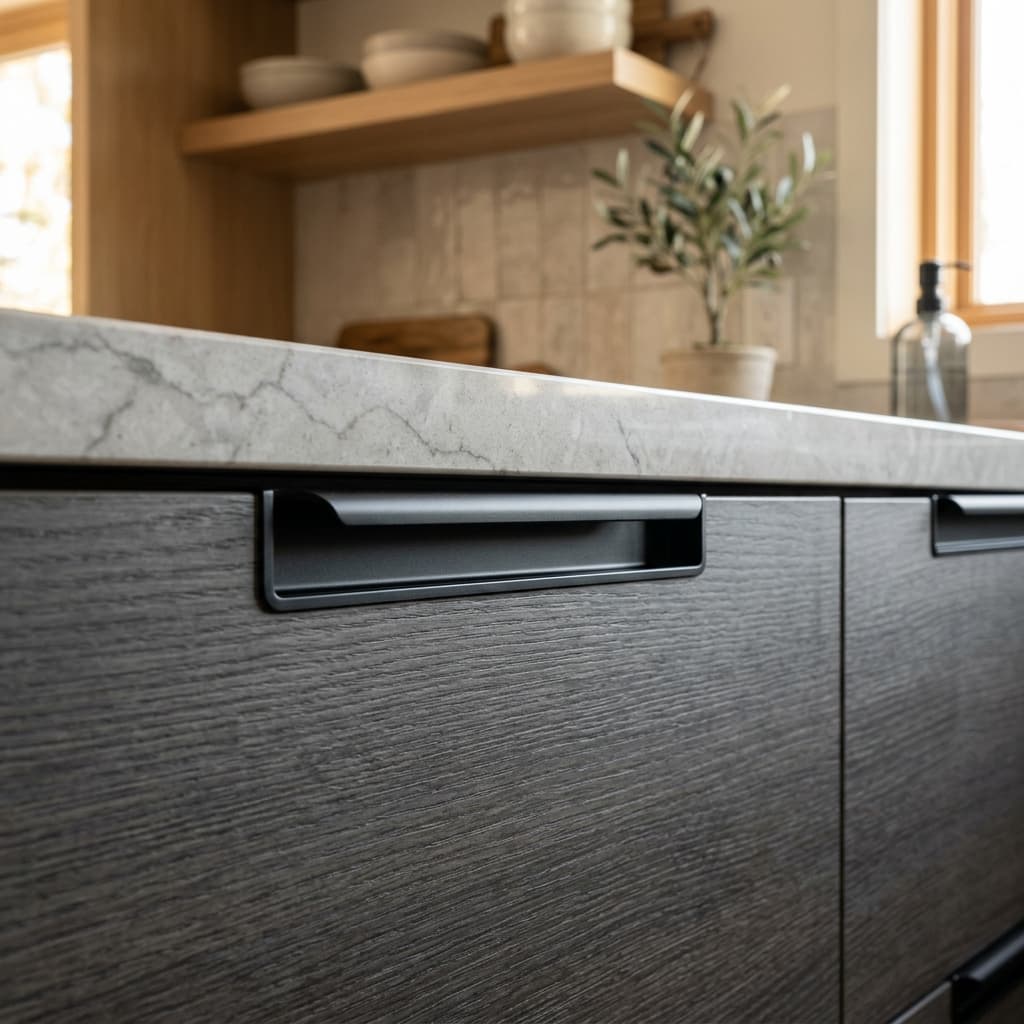
Edge Pulls
Edge pulls (also called finger pulls or integrated pulls) are recessed or minimal profiles mounted on the top or bottom edge of a door or drawer. They create a seamless, hardware-free look that works best on flat-panel (slab) cabinets in minimalist and contemporary kitchens. Edge pulls are common in DC condo renovations where the owner wants a clean, uninterrupted cabinet face. They pair well with handleless upper cabinets using a push-to-open mechanism.
Finish options
Choosing a Hardware Finish
| Finish | Character | Pairs well with | Fingerprints |
|---|---|---|---|
| Brushed Nickel | Warm silver, matte sheen | White, gray, cream cabinets; stainless appliances | Low visibility |
| Matte Black | Bold, graphic, contemporary | White, navy, sage, warm wood cabinets | Very low |
| Satin Brass / Gold | Warm, elevated, trending 2025–2026 | White, warm wood tones, forest green, black cabinets | Moderate |
| Polished Chrome | Classic, cool, mirror-bright | Stainless appliances, contemporary white kitchens | High visibility |
| Oil-Rubbed Bronze | Traditional, dark, warm | Raised-panel and traditional cabinets, cream or wood tones | Low visibility |
Match hardware finish to at least one other metal in the kitchen — faucet, light fixtures, or appliance handles — for a cohesive result.
Matching hardware to cabinets
Choosing Hardware by Cabinet Style
Shaker Cabinets
The most common cabinet style in DC kitchens. Shaker works with nearly any hardware, but looks sharpest with simple bar pulls (3–5" on doors, 6–8" on drawers) or cup pulls on lower drawers. Brushed nickel and matte black are both safe choices. Avoid overly ornate hardware — it competes with the frame.
Flat-Panel (Slab) Cabinets
Flat-panel cabinets call for minimal hardware. Long bar pulls (8–12"), edge pulls, or push-to-open mechanisms are the most consistent choices. Matte black and satin brass both read well against the clean face. Avoid knobs — the proportion doesn't suit a handle-free aesthetic.
Traditional / Raised-Panel
Raised-panel cabinets suit knobs on doors and either cup pulls or shorter bar pulls on drawers. Oil-rubbed bronze and brushed nickel are the most consistent finishes. Satin brass works for a more elevated traditional look. Avoid matte black — the contrast tends to feel anachronistic.
Inset Cabinets
Inset cabinets — where the door sits flush inside the cabinet frame — are the most refined construction type and are increasingly common in high-end DC renovations. Small bin pulls, petite bar pulls (3–4"), or small round knobs in satin brass or brushed nickel are ideal. Oversized hardware throws off the proportions of the frame-and-panel detail.
Sizing & cost
Sizing Rules and What Hardware Costs in DC
Sizing Guidelines
- Drawer pulls: aim for a pull length roughly 1/3 of the drawer width. Small drawers (12–18"): 3–5" pull. Medium drawers (18–24"): 5–8". Large drawers (24–36"): 8–12".
- Cabinet door knobs: 1–1.5" diameter, centered on the door stile, 2.5–3" from the corner.
- Cabinet door pulls: center the pull vertically, positioned in the upper third of lower cabinet doors and lower third of upper cabinet doors (toward the opening edge).
- Pantry/tall doors: long vertical bar pull (12–18"), centered horizontally at comfortable grip height (36–42" from floor).
Cost Ranges (DC Market)
- Budget ($2–$6/piece): stock bar pulls and knobs from big-box stores. Functional but finishes are thinner and less consistent.
- Mid-range ($6–$15/piece): better plating, more finish options, more consistent sizing. Brands like Amerock, Atlas Homewares, and Liberty at this tier.
- High-end ($15–$50+/piece): solid brass, European brands (Hafele, Sugatsune), architectural-grade pulls. Noticeably different in weight and finish depth.
- Full kitchen (40 pieces): $80–$600 at budget, $240–$600 mid-range, $600–$2,000+ at high-end.
Designing a kitchen in DC?
TAV Remodeling helps clients work through every selection — hardware, countertops, tile, lighting — as part of the design process before a contract is signed.
Hardware costs and availability vary by supplier and finish. TAV Remodeling works with clients to source hardware that fits project budget and design direction.