Insights • Materials
Best Kitchen Countertop Materials for DC Homes (2026)
Quartz, granite, quartzite, marble, butcher block — each has a different cost profile, maintenance demand, and performance record in DC's rowhouses and condos. This guide covers what each material actually costs installed in the DC market, where each performs best, and what TAV Remodeling recommends for most projects.
Planning a kitchen remodel? See typical project budgets on our Pricing & Packages page.

2026 installed cost ranges · DC market
Countertop Cost Comparison for DC Kitchens
| Material | Installed cost (per sq ft) | Best for |
|---|---|---|
| Quartz | $70 – $120 | Most DC kitchens — durable, low maintenance, consistent color |
| Granite | $60 – $110 | Natural stone look, heat resistance, unique slab patterns |
| Quartzite | $80 – $150 | High-end kitchens wanting marble look with better durability |
| Marble | $90 – $160 | Baking stations, powder rooms, owners who accept patina |
| Butcher Block | $40 – $80 | Prep islands, accent sections, warm natural aesthetic |
Ranges reflect material + fabrication + installation in the DC metro area. Final price depends on edge profiles, cutouts, slab grade, and site conditions.
Material by material
Pros, Cons & DC Considerations
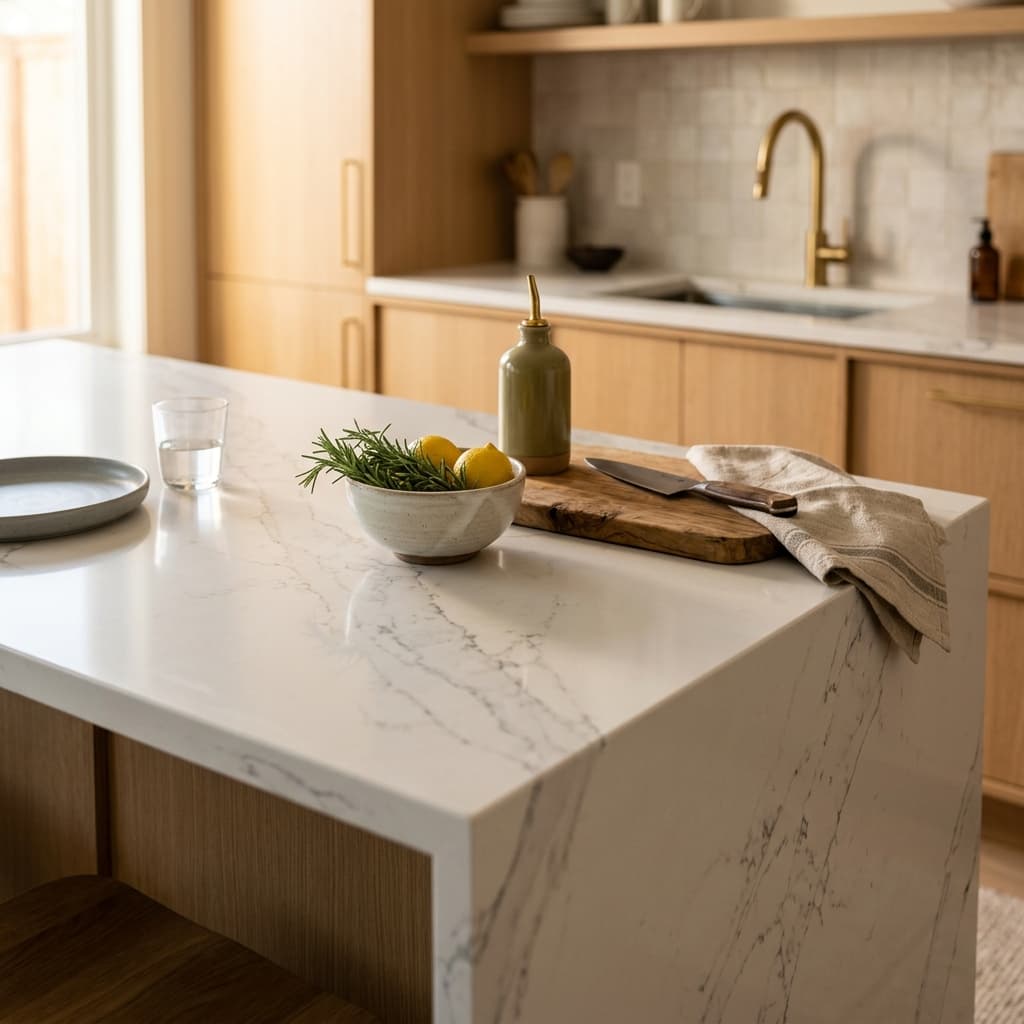
Quartz
Engineered quartz (brands like Silestone, Caesarstone, and Cambria) is the most popular countertop material in DC renovations for good reason: it's non-porous, never needs sealing, resists staining from coffee and wine, and comes in highly consistent colors and patterns. For DC rowhouses with varying humidity levels, quartz's dimensional stability outperforms natural stone.
Pros
- • Non-porous, no sealing required
- • Consistent appearance across slabs
- • Resistant to stains, scratches, and bacteria
- • Wide color range including marble-look options
Cons
- • Not heat-resistant — use trivets
- • Can look uniform compared to natural stone
- • Not suitable for outdoor kitchens (UV damage)
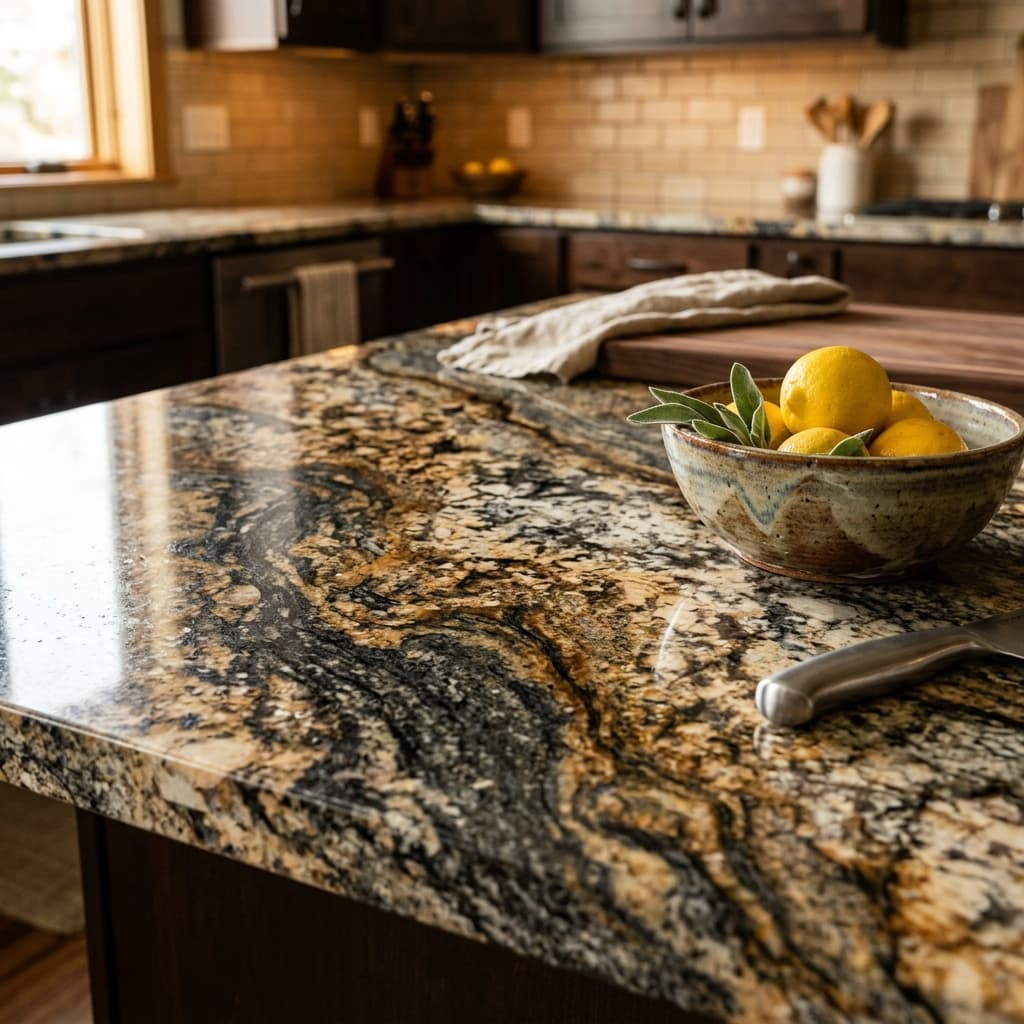
Granite
Granite remains a strong choice for DC homeowners who want a natural stone with heat resistance and unique slab character. No two slabs are identical, which appeals to buyers looking for a one-of-a-kind result. The main maintenance requirement is annual sealing to prevent moisture absorption — important in DC's humid summers.
Pros
- • Heat resistant — pots and pans directly on surface
- • Unique natural patterning per slab
- • Durable, chip-resistant when properly installed
Cons
- • Porous — requires annual sealing
- • Slab variation makes matching difficult
- • Heavier than engineered stone
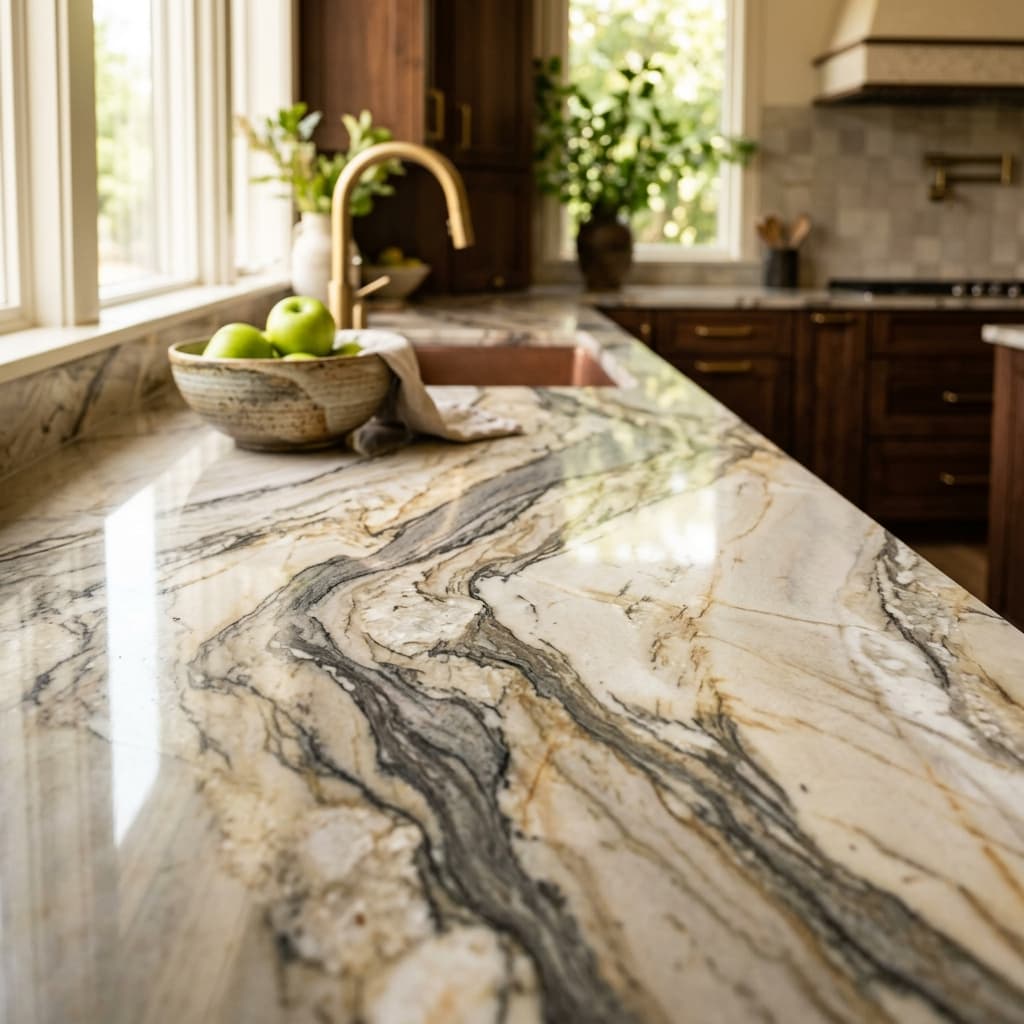
Quartzite
Often confused with quartz, quartzite is a natural metamorphic stone that delivers the dramatic veining of marble with significantly better hardness and acid resistance. It's the premium natural stone option for DC kitchens where aesthetics and durability both matter. Supply is more limited than granite, which affects pricing and slab availability.
Pros
- • Harder than granite, more scratch resistant
- • Marble-like appearance without marble's fragility
- • Unique natural veining
Cons
- • Most expensive natural stone option
- • Still requires sealing
- • Limited slab availability — source early
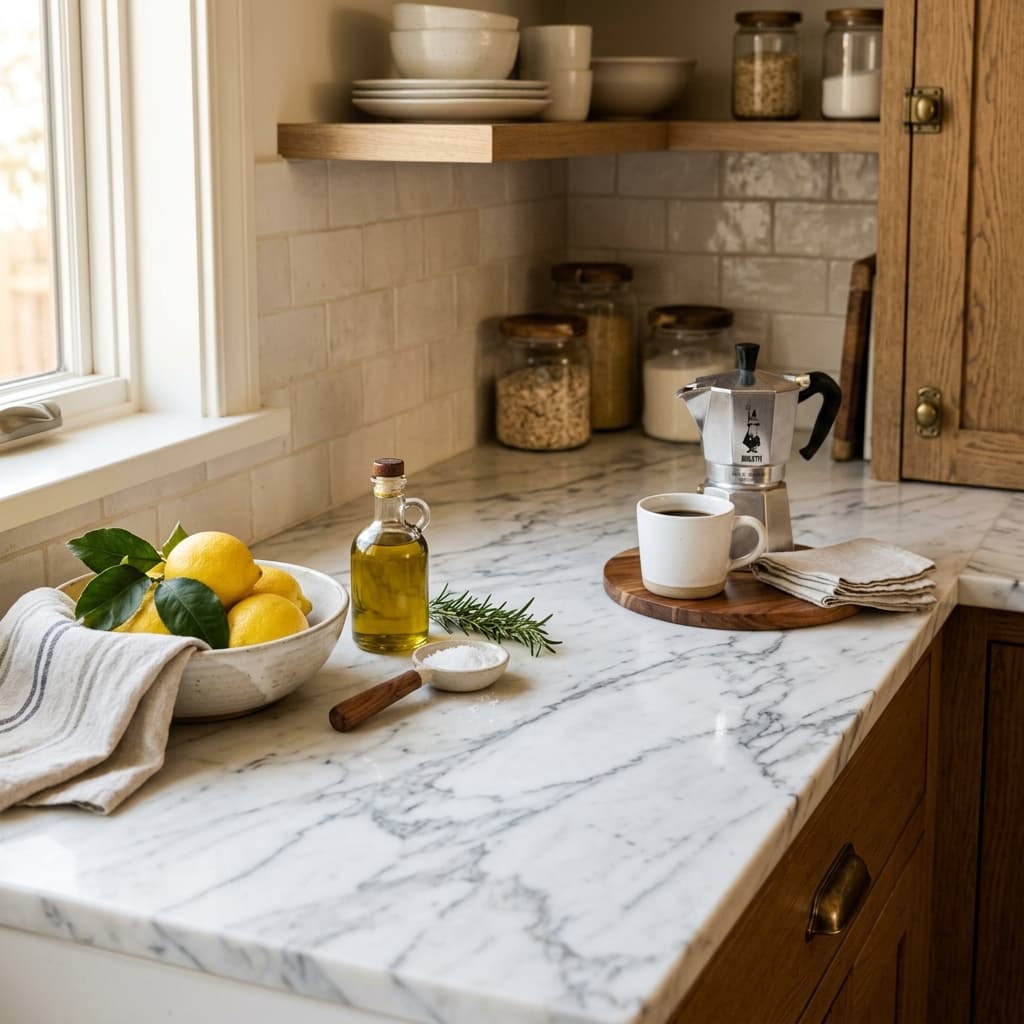
Marble
Marble is the most beautiful and the most demanding of the countertop materials. It etches when it comes in contact with acids — citrus juice, vinegar, wine — and it absorbs stains through its porous surface. In DC kitchens, TAV Remodeling typically recommends marble only for baking stations or islands, where contact with acidic foods is minimal and the aesthetic payoff is high.
Pros
- • Timeless, high-end appearance
- • Naturally cool surface — ideal for baking
- • Each slab is unique
Cons
- • Etches and stains easily
- • Requires frequent sealing and careful use
- • Develops patina over time (may be desirable)
Butcher Block
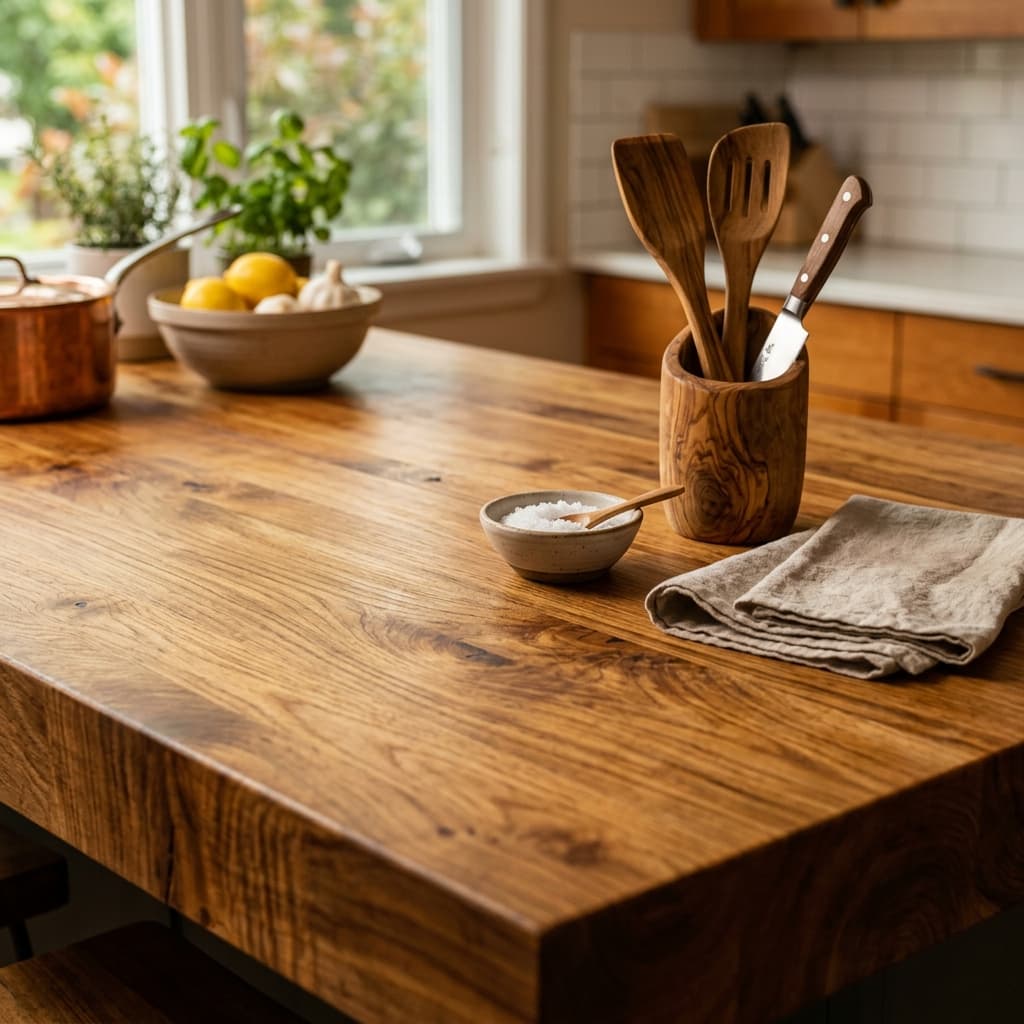
Butcher block brings warmth and a tactile quality no stone can replicate. It works particularly well as an island accent or prep section when paired with stone or quartz on the perimeter. In DC rowhouses with open-concept layouts where the kitchen flows into living space, butcher block creates visual contrast and a lived-in quality that softens an otherwise modern palette.
Pros
- • Lowest cost option at comparable sizes
- • Warm, natural aesthetic
- • Can be sanded and refinished if damaged
Cons
- • Requires oiling every 1–3 months
- • Susceptible to water damage near sinks
- • Not recommended as full-perimeter in high-use kitchens
Our recommendation
What TAV Remodeling Recommends
Most DC kitchens
Quartz. It handles DC's humidity, requires zero maintenance, and comes in enough colors to match any design direction. For homeowners who want the marble look without the upkeep, marble-look quartz is the practical answer.
High-end remodels
Quartzite. When clients want genuine natural stone with real veining but need it to hold up to daily use, quartzite is the upgrade. Budget $80–$150/sq ft installed and source the slab early — availability is tighter than granite.
Accent sections only
Butcher block or marble. Both work best as accent materials on an island or baking station, paired with quartz or quartzite on the perimeter. This gives the visual interest without putting a high-maintenance material in the highest-use zone.
Choosing a countertop for your kitchen remodel?
TAV Remodeling sources countertops through trusted DC-area fabricators and helps clients select materials that work with their design, budget, and daily use patterns.
Cost ranges are estimates for the DC metro area and vary by slab grade, edge profile, fabricator, and site conditions. Final pricing is confirmed after measurements and material selection.